Passover – Killing First Born – Exodus from Egypt

Why is the Mitzvah of putting on Tefillin viewed as being so important? During a Bar Mitzvah it is a central part of the celebration. What is the purpose of donning Tefillin?

At the end of  Perashat Bo we find two of the four paragraphs which we write on parchment and put into sturdy leather boxes which we call Tefillin. In its Tefillin oriented commandment the first of these paragraphs uses a different syntax than the others.


It should a be sign for you on your hand and a remembrance between your eyes, so that the teachings of G-d will be in your mouth since with a mighty hand G-d took you out of Egypt.

Our rabbis of blessed memory have said that the Mitzvah of Tefillin is equal to the entire Torah. (Torah Shelema) I believe that this Mitzvah is similar to tying a thread around your finger to remember something. By donning Tefillin we should remember the concepts which we learn from the Torah. A person who wears Tefillin should find it difficult to steal, yell at his mother, or think licentious thoughts all of which are forbidden and are especially mentioned with regards to wearing Tefillin.
Tefilin Helps to Prevent Transgression
Tefillin Helps to Prevent Transgression

In the Torah is a story about the first man who violated Shabat. There  is a Midrash which remarks that Moshe Rabbienu said to G-d that the man sinned because it was Shabbat when it is forbidden to wear Tefillin. He had no reminder of G-d’s presence. Under an Ideal situation which has not yet occurred in Jewish History it is best to wear Tefillin all day. Some have said that this applies more to those who are working than those who are immersed in Torah Study.
What is Tefillin

What is Tefillin? Why is the Mitzvah of putting on Tefillin viewed as being so important? During a Bar Mitzvah it is a central part of the celebration. What is the purpose of donning Tefillin?

Perashat Bo – Passover

There are four perashiot (paragraphs written on leather parchments) inside Tefillin boxes. The same four appear both in the Tefillin that are placed on the head and the one on the arm. These perashiot speak about central concepts in Judaism.61114_463088532596_7273307_n
The first perasha of “Kadesh li” discusses the freedom from slavery in Egypt. Two of the four sons from the Passover Seder are found in these paragraphs. The second perasha of “Vehaya Ki Yevi’acha” speaks about the plague of the first born of Egypt. The death of the first born of Egypt, in addition to redeeming of out first-born sons and animals, actuate a rejection of the strengths of idolatry and magical powers. The first born of the Egyptian as well as those of other nations were priests. The sanctity of the first born within Judaism is actually a rejection of idolatrous beliefs.

The final two paragraphs that are written in the tefillin are the most famous in Judaism. They are the first two paragraphs of “Shema Yisrael”. The portion of “Shema Yisrael” speaks about the Unity of the Blessed Creator and loving him. The final perasha is “Vehaya im Shmo’a”. It discusses Devine Providence and heavenly reward and punishment.

There is a distinct relationship between these four perashiot. They all mention the importance of study and internalization of these subjects. Additionally, educating children in these particular subjects is mandatory. One needs to constantly teach them to his children and even more so during the Passover Seder.

A source cited in the Talmud states “A child … who can take care of tefillin, his father acquires tefillin for him.” (Tosefta Chagiga 1, Succah 42a) Parents acquire tefillin when a child becomes old enough that he can care for himself and his tefillin. One can give this whole discussion a symbolic explanation.

These concepts that we have been discussing parents teach to their children from a very young age. Parents invest a lot of effort over the course of many years to teach these concepts to their children. The father ties these central concepts that are in the tefillin onto the child’s body when he is old enough to care for himself and his things. Through this the child internalizes these subjects until they actually become part of him.

Every Bar Mitzvah boy knows the importance of the Unity of the Creator, Divine Providence, reward and punishment, the exodus from Egypt and the rejection of Avoda Zara.


At the end of  Perashat Bo we find two of the four paragraphs which we write on parchment and put into sturdy leather boxes which we call Tefillin. In its Tefillin oriented commandment the first of these paragraphs uses a different syntax than the others.


It should a be sign for you on your hand and a remembrance between your eyes, so that the teachings of G-d will be in your mouth since with a mighty hand G-d took you out of Egypt.

What is Tefillin

Our rabbis of blessed memory have said that the Mitzvah of Tefillin is equal to the entire Torah. (Torah Shelema) I believe that this Mitzvah is similar to tying a thread around your finger to remember something. By donning Tefillin we should remember the concepts which we learn from the Torah. A person who wears Tefillin should find it difficult to steal, yell at his mother, or think licentious thoughts all of which are forbidden and are especially mentioned with regards to wearing Tefillin.

Whatt is Tefillin? They Help to Prevent Transgression
What is Tefillin? They Help to Prevent Transgression

In the Torah is a story about the first man who violated Shabat. There  is a Midrash which remarks that Moshe Rabbienu said to G-d that the man sinned because it was Shabbat when it is forbidden to wear Tefillin. He had no reminder of G-d’s presence. Under an Ideal situation which has not yet occurred in Jewish History it is best to wear Tefillin all day. Some have said that this applies more to those who are working than those who are immersed in Torah Study.

might say that it is childish to require a constant reminder but for busy people like ourselves we need secretaries and all types of electronic gadgetry to remind us of what we need to do.


Killing of the First Born
What is Tefillin – Killing of the First Born are in them

The concepts which are written on the parchments of the Tefillin discuss many topics which are central to a Torah lifestyle. A central theme in the first two paragraphs (in our Perashsa) is the final plague of the death of all of the firstborn which included man and beast. It is pointed out that since the Jewish firstborn were spared they must be redeemed from the sanctity which was then given to them. This demonstrates to us the greatness of G-d who differentiated between Jewish households and Egyptians, he knew which of a set of twins was firstborn and which animal was a firstborn. We use this to demonstrate G-d’s providence. G-d can guide us and intervene in any of our plans. Additionally, we see this providence in the Tefillin with a mention of G-d’s removing us from slavery in Egypt.

Concepts involving Passover and education of children are also mentioned several times. On Passover we have a special Mitzvoth to tell our children how we were released from bondage in Egypt. Indeed, the subject of education, both for us and our children is recurrent many times in all four paragraphs. Knowledge of the Mitzvoth and all of the concepts in the Torah should be a fundamental part of all of our lives. I have been known to say that Judaism does not thrive on ignorance.

The other two paragraphs inside the Tefillin are from the Shemah Yisrael. In these paragraphs we meet up with concepts of monotheism, love of G-d, education for all, writing Mezuzot, the tremendous rewards in store for us if we love G-d and follow the Torah, the punishment if we don’t, and many more.

For those who don Tefillin and think about these concepts it is considered that he was busy studying Torah. (Mechilta)

Tefilin Sel Yad With 7 line Shma Yisrael - תפילין של יד עם שמע ישראל ב7 שורות

Tefillin – Ancient Black Boxes With Milk and Honey Inside

Inside Tefillin – A Land Flowing With Milk and Honey

Tefillin are a set of small black leather boxes containing scrolls of parchment inscribed with verses from the Torah. They are worn by Jews during weekday morning prayers; Some wear them all day long while working or studying Torah.

The tefillin are to serve as a reminder of God’s intervention at the time of the Exodus from Egypt. Maimonides details of the sanctity of tefillin and writes that “as long as the tefillin are on the head and on the arm of a man, he is modest and God-fearing and will not be attracted by hilarity or idle talk; he will have no evil thoughts, but will devote all his thoughts to truth and righteousness” The Sefer ha-Chinuch (14th century) adds that the purpose of tefillin is to help subjugate a person’s worldly desires and encourage spiritual development. Joseph Caro (16th century) explains that tefillin are placed on the arm adjacent to the heart and on the head above the brain to demonstrate that these two major organs are willing to perform the service of God.

Tefillin on the head is close to the Frontal Cortex where higher thoughts are processed

What’s in the Tefillin Boxes?

The Torah mentions the mitzvah of tefillin four separate times. Each of these texts is inscribed on parchment and placed into the tefillin. These passages discuss the unity of G‑d. They describe the miracles G‑d performed for us when He took us out of Egypt, and how G‑d alone has the power and dominion to do whatever He wants in the physical and spiritual worlds. In other words, these verses cover the fundamentals of our faith.

These texts are:

1–2. Kadesh (Exodus 13:1–10) and Vehayah ki yeviacha (Exodus 13:11–16): These describe the duty of the Jewish people to always remember the redemption from Egyptian bondage, and the obligation of every Jew to educate his children about this and about G‑d’s commandments. It includes the promise to bring the Jewish people to a land flowing with milk and honey.
3. Shema (Deut. 6:4–9): Pronounces the unity of the one G‑d, and commands us to love and fear Him.
4. Vehayah (Deut. 11:13–21): Focuses on G‑d’s assurance to us of reward that will follow our observance of the Torah’s mitzvahs.


Tefillin worn on the head, One side has a Shin with 4 heads, it usually has three

In the perashiot inside the Tefillin the statement that Israel is a land flowing with milk and Honey is written.

Tefillin has the verse telling the Jews that the land of Israel flows with milk and honey

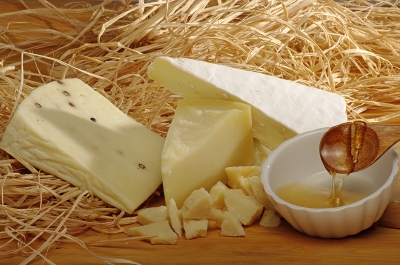
Both words milk and honey instill positive connotations to virtually every human being. Their presence in the land demonstrates a good economy. This goes so far that honey is actually the word used to describe any “sweet” concept. Milk and milk products are universally rich and fatty substances.

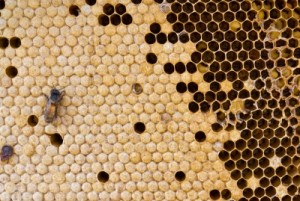
Bees Honey Comb
Bees Honey Comb

Riesh Lakish was an Emora during the Talmudic period. He says that he saw a lamb grazing under a fig tree dripping with honey. The lamb itself was dripping its milk onto the honey. He said that this represented the land flowing with milk and honey. (Ketubot 111b)In the Torah honey generally refers to date honey. However, several uses of the word honey refer to bee’s honey as well as others that refer to any honey like substance that easily exudes from fruit.
 

Our Rabbis of Blessed Memory have additionally said that the fruit of Israel are fatty like milk and sweet like honey. (Ketubot 112a)

Tefillin Shel Yad worn on the arm with the 7 lines of the Shma Yisrael prayer.

It seems that the term honey is in reality a difficult word to specifically understand. Above we saw that Reish Lakish leaves the term honey open ended by referring to fig “honey” while discussing the phrase, “A land flowing with milk and honey.” However, what the words milk and honey include seems to be a disagreement of Tanaim of the Mishnaic period.

According to Rabi Eliezer milk in “Milk and Honey” means that the milk of the fruits is very rich and that the honey refers only to Date Honey. However, Rabi Akiva disagrees and says that milk refers to real milk and that honey refers to “Yearot Dvash” “Yearot Honey .“ (Mechilta Derashb”i)


Sugar Cane Juice Sold in Israel

There is further disagreement between Rashi and his school of thought and Radak as to what “Yearot Dvash” means. According to Rashi it means canes with honey in them that grow in Israel. It seems possible that Rashi refers to cane sugar or perhaps another sweet cane. However, Rada”k questions Rashi’s source material and then says that “Yearot Dvash” refers to ordinary bee’s honey combs. (Shmuel 1 14 25)

Stubborn People need a land with great natural resources

In Parashat Ki Tisa The Holy one Blessed be He stated that he would not himself lead the people of Israel into the Holy land instead an Angel will do this. “A land flowing with milk and honey. But I will not go in your midst, since you are a stiff-necked people, lest I destroy you on the way.” (Shemot 33 3)

On this Pasuk Seforno points out that the Jewish people need a land that is naturally rich. They are a stiff-necked people. Do to this they will not be successful living in a place like the desert where they need constant miracles to survive.

Dairy products are central to many Jewish customs. On Shavuot we eat dairy. Many say that this is because the Jewish people did not have time to learn the laws of Shchita (ritual slaughtering) and Kashrut laws. Therefore, they ate dairy.

ID-10058272

Honey has left a great impact on the Jewish people. Although a tiny portion of the worlds population is Jewish we consume 20% of the world’s honey. This was pointed out to me by the people buy honey sellers who thought that  as a Jewish website milknhoney.co.il must want to market their honey. The most famous of these sweet customs is on Rosh Hashana when almost every Jew in the world dips an apple in honey.


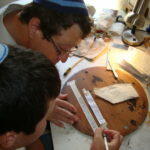
Rabbi Steve Bar Yakov Gindi writing Tefillin parchments

What’s Written Inside The Black Boxes of Tefillin? Firstborn

INSIDE TEFILLIN – FIRSTBORN

And every firstling of an ass thou shalt redeem with a lamb; and if thou wilt not redeem it, then thou shalt break its neck

וכל פטר חמר תפדה בשה ואם לא תפדה וערפתו

Tefillin has redeeming the first born donkey

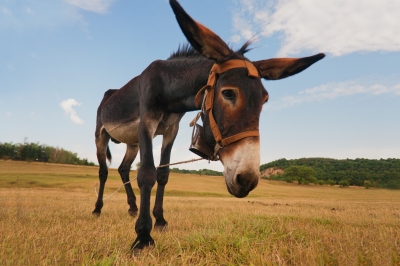
The Torah commands us, in the Perashiot that we don in our Tefillin every day, to redeem all of the Jewish firstborn boys. These are written in the Second Perasha of  the Tefillin. At the same time we are commanded to give all kosher first-born animals as a sacrifice to G-d. Most un-kosher animals are exempt from being given to G-d. However, A firstborn donkey must be exchanged for a lamb that is given to the Kohen. The lamb does not need to be sacrificed. The firstborn donkey’s neck is cracked, if for some reason the donkey is not exchanged for a lamb. (Shemot 13)

Redeem the Donkey in tefillin
Redeem the Donkey in Tefillin

Many people daily ponder this concept, which they tie upon themselves daily. However, many do not. The stated reason in the Torah regarding the firstborn is to remember slavery and exodus from Egypt. The greatest plague that G-d brought on Egypt was the death of firstborn Egyptians. This is a central episode in the story of the Jews leaving Egypt. The story of leaving Egypt itself is central to Judaism.

When we daily put on Tefillin we also remember leaving Egypt. This is part of “Kabalat ol Malchut Shamayim – Accepting the yoke of Heaven”


Firstborn male children who are to be redeemed need to be firstborn from their mother. A father needs to redeem every firstborn that different women might bear with five silver coins.

The firstborn Jews were supposed to have been holy to G-d like the Kohanim. The reason for this is due to the killing of the Egyptian firstborn. However, the firstborn were exchanged for the Kohanim. This was done one for one. There were exactly 22000 Kohanim and 22273 firstborn. The extra firstborn needed to exchange themselves with 5 silver coins, as we are commanded to do with each firstborn. (Bamidbar 3)

Tefillin2

Another reason that is discussed about laws of sacrificing firstborn kosher animals and redeeming people and donkeys is related to the Bikurim – First fruits. Each individual also brings these to the Bet Hamikdash in a fancy ceremony.

It has been discussed by Our Rabbis of Blessed Memory as to why the donkey is singled out, over all other un-kosher animals, to need redemption. Rashi states these opinions, first, that The Egyptian firstborn were compared to donkeys. The second reason is because every Jew who left Egypt took lots of donkeys that carried tons of cash and gold that was taken from the Egyptians.

mailto:steve@gindi.co.il


Tefillin, Mezuzot and Megilat Esther – Are They Really Kosher ?

Shalom,Rabbi Steve Bar Yakov Gindi

Now is the time to order Tefillin for your son’s Bar Mitzvah, Mezuzot and Megilat Esther. This year is a leap year, very many people order Megilot Esther. Call 00972544572366 or email steve@milknhoney.co.il

Our Torah website http://torah.milknhoney.co.il/ has been redesigned. You can find hundreds of Divrey Torah Discussions there.

You can see samples of my Sofer Stam work at https://milknhoney.co.il/gallery3/

For many years you  have been taught to be very careful about from whom you purchase Tefillin, Mezuzot,  Megilat Esther and Sifrey Torah from. They say ninety-nine percent kosher equals one hundred percent passul (not kosher)

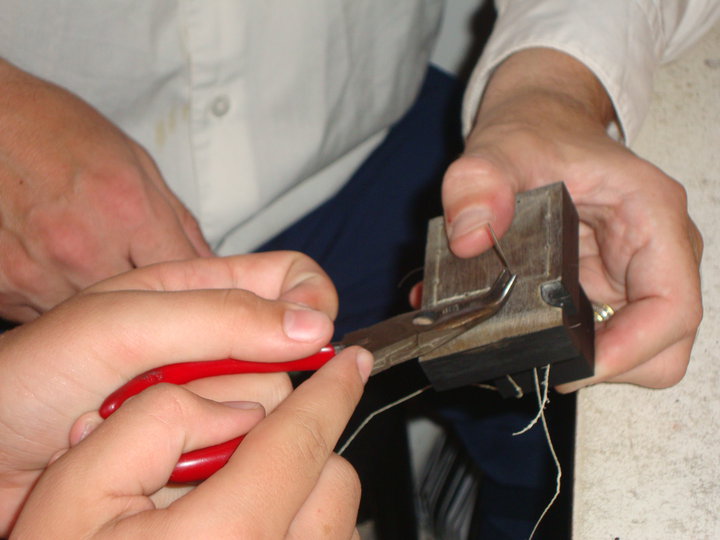
I am often called upon to check people’s Tefillin. I and the honest Sofrim that I know  rarely find Tefillin that aren’t kosher!  When I have found Tefillin that are unkosher they are always over 30 years old, written before the Jewish world became more careful in these issues. Indeed, thrity years ago all the honest sofrim would not charge people for checking Tefillin. This is because it was pretty guaranteed that they were clearly not kosher. Today an honest Sofer will always charge to check Tefillin. Sewing up the modern Gassot Tefillin in a manner that will look nice, in the same condition received is a lot of work. So much so that I, personally, contract someone else to sew and seal them.