Milknhoney Judaica

Category: Tefillin תפילין

  • About


    Rabbi Gindi is Sofer Sta”m – Scribe since 1986. You can be certain that Tefillin that you buy from me is one hundred kosher. They have all been certified kosher. Please let me know if you prefer to wait an additional few days for the Tefillin to be computer checked, if I do not have pre-checked in stock.
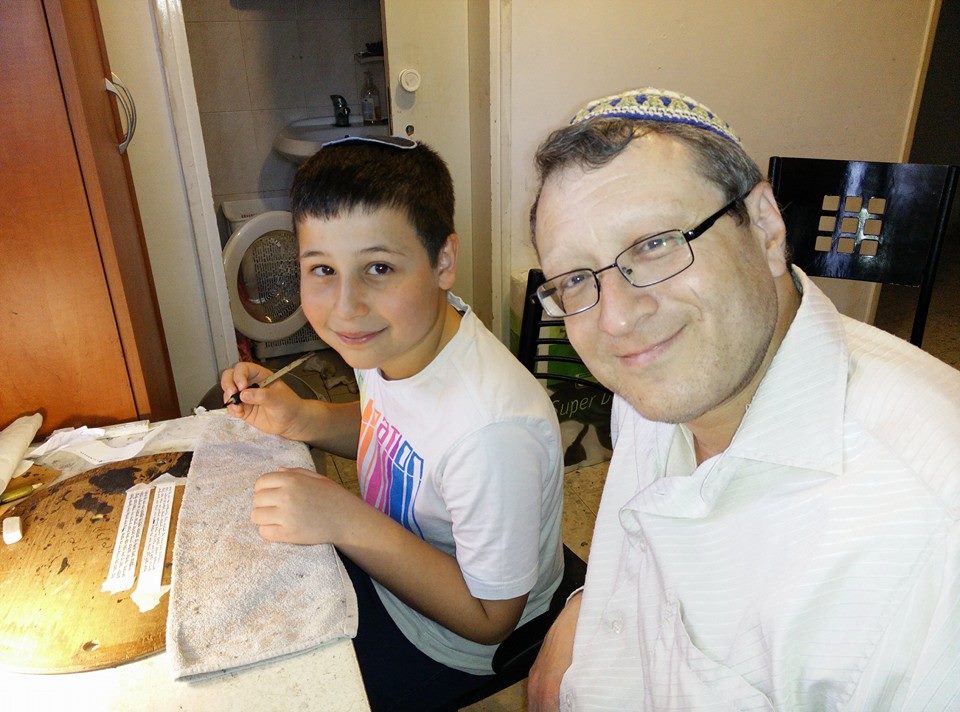
    11060306_10153076555742597_9206097490069856695_nMatan-Gordon

    In order to make the Tefillin Kosher I spend about 18 hours writing them. This is the case even for less expensive Peshutim Mehudarim Tefillin.

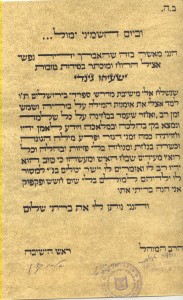
    Rabbi Gindi has Rabbinic Ordination from the Chief Rabbinate of Israel, He has Sofer / Scribe certification from the Yeshiva Midrash Sepharadi – Shehebar Sephardic Center, as well as has been tested by the Vaad Mishmeret Stam. He is also a certified Mohel and Shochet.

    I live with my family in Jerusalem, where I write the Tefillin, Megilot, Mezuzot, and Sefer Torahs. I have written the parchments for about 500 pairs of tefillin, Thousands of Mezuzot, dozens of Megilot and other Scrolls, as well as four Sefer Torahs.

    Rabbi Gindi is recommended by many community Rabbis, and has supplied some families with Mezuzot, Tefilin, Megilot, Sefer Torah for three generations of grandparents buying for themselves , their children and grandson’s Bar Mitzvah’s.

    https://youtu.be/B43vyOF5g3k 


    Blessings,
    Steve

    Also See Testimonials about Rabbi Gindi

    Certifications

    vaad mishmeret stam
    Vaad Mishmeret Stam – Tested by  Rav Friedlander
    Mohel Diploma
    Mohel Diploma
    Shochet Diploma
    Shochet Diploma
    Sofer Diploma - Midrash Sepharadi
    Sofer Diploma – Midrash Sepharadi
  • Retzuot Tefillin Straps

    Retzuot Tefillin Straps

    עוֹר הָרְצוּעוֹת צָרִיך שְׁיִהְיֶה מֵעוֹר בְּהֵמָה חַיָּה וָעוֹף הַטְּהוֹרִים,
    וְצָרִיךְ שְׁיִהְיֶה מְעֻבָּד לִשְׁמוֹ.
    הֲלָכָה לְמֹשֶה מִסִינַי שְיִהְיוּ הָרְצוּעוּת שְחֹרוֹת מִבַּחוּץ, אֲבָל מִצַּד פְּנִים
    יַעֲשֶֹה מֵאֵיזֶּה צֶבַע שְׁיִרְצֶה, חוּץ מֵאָדֹם”…
    (שולחן ערוך, אורח חיים, סימן לג’ סעיף ג)

    The leather of the retzuot –  tefillin straps  must come from the hide of a kosher animal and the hide must be treated for the sake of Holiness. Retzuot may be made from hide or klaf parchment. Halacha L’Moshe Misinai teaches that the retzuot must be black on the outside. The inside surface may be any color except red since someone may think that the red came from bloody sores.


    Great Selection of Premium Retzuot Tefillin Straps

    The leather straps of the Tefillin bind the Tefillin to your arm. Lately people have become more demanding regarding what they expect in Tefillin straps. We find many of the Halachot about Retzuot Tefillin straps in the Gemara in Masechet Shabbat (28b). Tefillin straps should be made from leather, the skin from a kosher animal, and they must be black.

    Today, there is a great selection of premium Retzuot Tefillin straps. You can order your Tefillin with shiny or matte handmade straps. These can be painted on one side and raw leather on the other or black through and through. You can also order softer straps which have been oiled. The best Tefillin straps are made in Israel, but nowadays they are also made in Italy and even in Thailand. Most have Mehadrin rabbinic supervision.

    We make an effort to obtain the very best Retzuot Tefillin straps available. These straps are black through and through, and made from the finest Or Elyon – Top Grain leather, so even if the shiny paint cracks after years of use, they will still be kosher. They are supple and can be folded without problems.

    Various requests from my customers have lead me to research the Halachot and customs regarding Tefillin straps beyond what is usually taught to Sofrey Stam (scribes). In fact, a specific description made by one of my clients led me on an enlightening journey to learn much more about Tefillin straps, Here is the explanation exactly as emailed from the client:

    The straps that I am looking for are a supple and thicker kind of leather that is black on both sides and have a thin layer of glossy on the outside surface that when rubbed off is much like thin electrical tape and reveals a solid black matte finish underneath. The leather is softer and again, very supple. They should be cut bar mitzvah bachur width.

    They should NOT be…

    • pressed leather

    • stiff leather bonded with heavy vinyl or black plastic

    • so stiff that they are prone to cracking when they are sharply bent.

    • rough on the skin

    Much of the following is the result trying to satisfy the client as well as to give him halachically Beautiful Straps that even Rambam himself would approve of.

    Mehudar Hand Made Tefillin Straps All Black on both sides
    Mehudar Hand Made Tefillin Straps All Black on both sides

    Different Quality Retzuot Tefillin Straps

    leather spliiter machine
    leather spliiter machine

    Whole cow leather is very thick, too thick to be used as Retzuot Tefillin Straps. The leather hide goes into a machine where a blade ‘splits’ the hide into two layers. The bottom layer is known as Split Leather, In Hebrew it is called Or Tachton עור תחתון. The Split Leather is popularly known as Shpalt (perhaps from the Yiddish), or perhaps from a root similar to the word split (Since I am just a Sofer Stam not a linguist, I would not venture an opinion on the source of the word). Split leather tears easily, and doesn’t last well through daily use for many years. People who wear their Tefillin only occasionally may prefer to pay less and get “Tefillin Mehudarim”  with Shpalt straps. Cheap leather work gloves are also made of split leather, and you can buy them at any hardware store.

    leather work gloves made of split leather
    leather work gloves made of split leather

    The top portion of the above process is known as Top Grain Leather, known in Hebrew as Or Elyon עור עליון. The best retzuos come from Or Elyon.

    “Peshutim Mehudarim” Tefillin are often made from straps that are both Shpalt and Machine made, perhaps even machine painted. If they prove unwearable soon after purchase, the seller will likely exchange them. The machine is operated by a Jewish person who states that he is running the machine for the sake of holiness. This process is similar to Passover Matzah and Tzitzit which are also often made by machine.

    “Handmade” Tefillin straps are not made by machine at all, but are hand crafted with great attention.

    Glossy Top Layer

    The Tefillin description from the client I cited above stated that he wanted a strap that would “have a thin layer of glossy on the outside surface that when rubbed off is much like thin electrical tape“. The actual paint is matte, but a shiny layer is added later.

    Several years ago the market was flooded with Tefillin Straps that had bubbles under the shiny black and even totally separated from the straps leaving no black paint absorbed into the leather, just a tape looking much like electrical tape. According to Edah Hacharedis under Rav Moshe Shternbuch  these straps should be changed even if the underneath had not yet become exposed. Due to technological experimentation of many Retzout Tefillin Strap makers  this issue happened to many straps, though for a short period of time. Rav Friedlander Shlitta  formerly of the Vaad Mishmeret Stam, stated that this problem could be corrected. After the problem was brought to the factorys’ attention, the production process was adjusted, They fixed their production process and now straps are fine. I believe that these were imported from Thailand, but am not sure. After the factory adjusted the production process, Rav Friedlander said that it is fine to buy from that factory (which he refuses to name). See Retzuos Revisited (Again) by Rabbi Yerachmiel Askotzky  You can see Rabbi Askotzky’s Sofer Stam Site at http://www.stam.net/

    Tangentially, one article mentioned the fact that the top surface of the retzuos is coated with a synthetic adhesive prior to painting. This shouldn’t cause a stir. This helps strengthen the leather fibers, which are weakened by the chromium sulfate in the final stages of tanning. This has been done for years and with the knowledge of the poskim. Once dry, the leather is sanded down to remove any of the material on the surface, allowing only what has soaked into the leather to remain so painting is actually onto the leather and not onto this adhesive and this treatment should also not prevent the paint from soaking into the leather.

    Further clarification was sent to me from Rabbi Askotzky

    The issue was that there was a fairly large batch of retzuos in which the paint didn’t adhere to the leather properly and it peeled off like tape. If it peeled it was pasul, unless black underneath. It was not plastic or vinyl. The question was, what was the status of the retzuos than were you to slip a knife under the paint you could then peel it off like tape. The Edah said it was as if it wasn’t connected and Rav Moshe Shaul Klein said that as long as it was connected it was kosher lechatchila but the owner had the right to return for a replacement or refund.

    Note that this has happened to many makers no matter the quality and hechsher but this was larger scale.) The poskim chose to not publicize to the hamon am the specific maker(s) in question. The fact is that it likely happened to a few makers, one of whom is reliable with a reliable hechsher and who dealt with it and who was willing to take any problematic retzuos back. The larger problem may have been with retzuos from a maker who I understand may be questionable. People may have confused his retzuos with the more reliable maker since he had a (questionable?) hechsher from a rav with the same last name.

    If you stick to retzuos under Rav Landau or the Edah you’ll be getting the most mehudar retzuos with the most reliable hechsher. Those made under Rav Moshe Shaul Klein (not another Rav Klein) are also mehudar. Ialso understand those under Rav Leifer are also mehudar.

    Note that the retzuos have a gloss shine because a gloss shine is painted on top. The natural color of the black is more matte. (Some mix a little black paint into the gloss.)

    Black on both sides

    The Rambam prefers that the leather for the straps be black on both sides and made “Lishma” – for the sake of the holiness of Tefillin by a Jew. The following is also  a quote from Rabbi Yerachmiel Askotzky:


    I’ve heard of retzuos that are called all black, black on black, black on both sides, double black and black through and through. I’m confused by all these terms. What type of retzuos are these and is there reason to use them?

    In addition to the typical black on top retzuos, the makers of avodas yad (handmade) retzuos produced, for a limited clientele, a small quantity of doubled sided black retzuos and/or retzuos that were black on the sides.

    Why?

    According to the Rambam and the Or Zarua the back side of the retzuos should be black as well. While this is not the accepted halachah there have always been individuals who have worn such retzuos. These retzuos have long been referred to as double black or black on both sides.

    According to the Keses Hasofer (author of the Kitzur Shulchan Aruch) the sides of the retzuos should be black as well. Again, even though this is not the accepted halachah there has always been some demand for them.

    Around ten years ago, after some experimentation, the makers of avodas yad retzuos started producing retzuos which, in addition to the regular painted tops, were saturated in black dye producing a black through and through retzuah. The tanned hides are soaked in a bath of black dye until the entire thickness is totally black. Just like the regular retzuos, the top surfaces are then painted and finally cut into strips, creating a retzuah that is black both on the top, back, sides and within. The top surface has a glossy, smooth black finish while the sides and back are a matte black and maintain their natural leather finish.

    These new straps obviated the need for the double black and black on the sides retzuos.

    What’s the purpose of the inside of the leather being black?

    The top surface of the retzuos must be black according to halacha lemoshe misinai. This is not the forum to go into detail but the fact is that a non black spot on the top surface makes the retzuah and thus the tefillin bedieved at best. Since the leather is completely saturated with the black dye, the area below the painted surface is also black. Hence, if paint wears or cracks off the top surface it remains black, preventing the retzuos from ever becoming bedieved or passul for lack of black.

    I’ve seen some of these retzuos that look more gray or charcoal color on the backside. Is this just because it is matte while the top is glossy or is it in fact not black?

    Bear in mind that for the all black retzuos to function as intended, the dyed leather must, in fact, be black. However, it is still somewhat common for the dyed leather to come out charcoal or gray. There is no difference between the single black sided retzuos with natural color leather and the all black retzuos with dyed leather that is not a halachic shade of black. A dark charcoal shade might be deemed acceptable but gray is not. When in doubt consult a posek.

    The machshirim don’t consider it their jurisdiction to verify that the color of the back, sides or inside of the leather is halachically black since this is not a kashrus or hiddur issue. Unfortunately, rather than redying them until they turn black, some of the makers are marketing them as is. This author finds it inexcusable since consumers are misled into thinking that they never have to touch up these type of retzuos. In fact, though, unbeknownst to the wearer, the leather underneath is not halachically black causing the retzuos to become bedieved or passul when the upper layer of paint wears or cracks. Retailers and consumers must refuse such retzuos and they certainly have the right to demand a refund or exchange.

    I understand from Rabbi Askotzky’s explanation that the Rambam had stated that the straps were not soaked in black dye but rather painted from both sides. Perhaps the Rambam’s description might leave the inside brown, natural leather looking, so when the paint cracks, hopefully only after many years, the wearer will be left with questionable straps that are not all black. Tefillin Straps might have been shiny when painted on both sides, but still if the paint were to crack, it would expose the brown leather, rendering the straps unkosher. I do not know what they might have looked like since I have not seen them.

    The all black straps currently on the market expose only more blackness if and when they crack. These are very high quality and should last 10-20 years, while regular straps often need to be replaced after 5 years.

    Leather splitting compared to parchment production

    The leather is cut in half, much like klaf and duchsustos are separated. The top is Elyon, where the hair comes out. The shiny black is on the hair side. The Tachton is the inside part, it starts out harder and rougher, this quickly deteriorates. All leather softens after you start to use it, be it in a couch, attaché case, belt and certainly Tefillin donned daily. It has been stated that the rougher feeling of the inside of these straps is due to the massive amount of dyes used to make them completely black.

    Why do some Tefillin Straps crack and might still be soft while other hard straps hold the paint well?

    I sent out an e-mail to some fellow Sofrim that I know to be learned. One of them who actually produces his own special handmade straps; he states that all leather skins are different, some will be softer which means they are fattier. The shiny paint has a tendency to peel off the softer fattier leather.

    Tefillin Straps made from Klaf Parchment

    Shulchan Aruch adds that the Tefillin straps can be made of klaf parchment painted black. (Shulchan Aruch 33 – 3 in the name of Mordechai – Halachot Ketanot 969) Although Klaf is generally the external part of the leather, one can certainly assume that Split Leather – Or Tachton – Shpalt may also be used.

    Cracked Tefillin Straps

    The following is further quoted from Rabbi Askotzky. His description is superior to nay I might have written:

    Cracked Retzuot Tefillin Straps
    Cracked Retzuot Tefillin Straps

    Q: What if your Retzuos Tefillin Straps are cracked exposing the brown leather underneath?
    The top surface of the retzuos must be black according to Halacha L’Moshe Misinai. This is not the forum to go into detail but the fact is that a non- black spot on the top surface makes the retzuah and thus the Tefillin “bedieved” at best. Since the leather is completely saturated with the black dye, the area below the painted surface is also black. Hence, if paint wears or cracks off the top surface it remains black, preventing the retzuos from ever becoming “bedieved” or “passul” for lack of black.
    Q: I’ve seen some of these retzuos that look more gray or charcoal color on the backside. Is this just because it is matte, while the top is glossy or is it in fact not black?
    Bear in mind that for the all black retzuos to function as intended, the dyed leather must, in fact, be black. However, it is still somewhat common for the dyed leather to come out charcoal or gray. There is no difference between the single black sided retzuos with natural color leather and the all black retzuos with dyed leather that is not a halachic shade of black. A dark charcoal shade might be deemed acceptable, but gray is not. When in doubt consult a posek.
    The machshirim don’t consider it their jurisdiction to verify that the color of the back, sides or inside of the leather is halachically black since this is not a kashrus or hiddur issue. Unfortunately, rather than redying them until they turn black, some of the makers are marketing them as is. This author finds it inexcusable since consumers are misled into thinking that they never have to touch up these type of retzuos. In fact, though, unbeknownst to the wearer, the leather underneath is not halachically black causing the retzuos to become “bedieved “or “passul” when the upper layer of paint wears off or cracks. Retailers and consumers must refuse such retzuos and they certainly have the right to demand a refund or exchange.

    Required Width of the Retzuot Tefillin Straps

    A final note from Rabbi  Yerachmiel Askotzky

    Also, the minimum width is 9mm. lechatchila, Sefardim require 10mm and for Ashkenazim it should be 11mm. This is why the retzuos should start off at 14-15mm as they may gradually stretch.

  • What makes Tefillin kosher?

    What makes Kosher Tefillin ?

    Much work goes into making a pair of  kosher Tefillin , Mezuzah, etc.

    edgewaretefilinbannerlarger

    simplemezuzacase


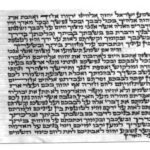
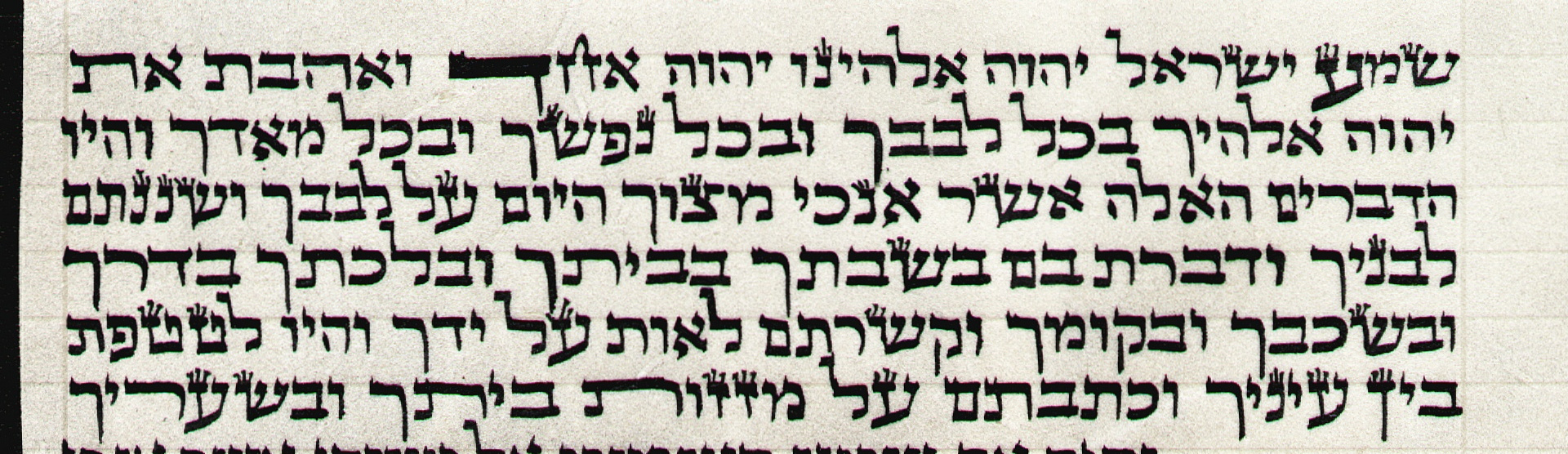
    I personally write the parchment scrolls. In order for Tefillin or Mezuza to be kosher it must be written on parchment from a kosher type of animal. The ink also needs to be kosher and black as a Raven and must be a certain consistency so that it does not get too absorbed into the klaf parchment so that it can be erased with a blade.

    kosher ink needs to be as black as a raven
    kosher ink needs to be as black as a raven


    Mezuzot and Tefillin must be written in order

    Mezuzot and Tefillin must be written in order from the first letter to the last. Because of this, fixing them is often forbidden. The unkosher scrolls are buried in the Geniza.

    Maimonides – Rambam style Parchment

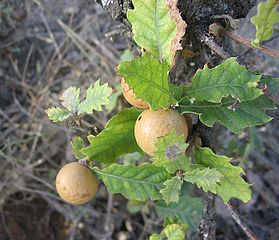
    Gall from an Oak Tree often called Oak Apple
    Gall from an Oak Tree often called Oak Apple

    I buy the lined parchments clean without writing as well as Tefillin Boxes,  as I do not make these . Many hours of work go into making these, They are all hand made too. The parchments need to be treated. According to  Maimonides – Rambam and the Talmud  (Shabat 75 b)  the parchment needs to be salted, treated with flower and then with Gall.

    Most parchment today is not made according to Rambam,  instead it is treated with lime. Those who make the Klaf according to Rambam today make a very superior parchment that is a pleasure to write on. It costs 3 times as much for this parchment. You can order Rambam Mezuzot and Tefillin directly from me.


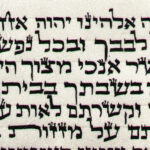
    Tefillin Parchment written on Oak Gall treated parchment.
    Tefillin Parchment written on Gall treated parchment.
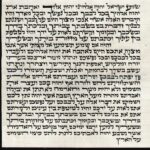
    Mezzuza Scroll written on Lime treated parchment
    Mezzuza Scroll written on Lime treated parchment – Clear and Beautiful Handwriting of Rabbi Steve Bar Yakov Gindi

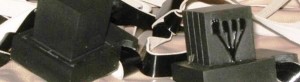
    The boxes of tefillin are also made of leather and are also completely hand made. Many Halachot apply to the Boxes of Tefillin. They need to be square, The pattern of the holes for the sewing must be square. It must have a whole for the straps to pass through and much more. The Tefillin put on the head needs to have four completely separate compartments. They must be sewed closed using a thread made of sinew.

    The parchments need to rolled up and placed in the correct order in the boxes. The klaf parchments need to be wrapped in another piece of blank parchment and tied closed with hairs from the tail of a kosher animal.
    Many man hours of work go into preparing the parchment, ink and Boxes of these holy articles. This is why you should be suspicious if a Mezuza costs less than you would pay a professional worker for 2 hours of work and a pair of Tefillin for 25 – 30 hours of work.

    I have only touched on the many Halachot  regarding Tefillin and Mezuzot. Much More has not been discussed.

    I have previously discussed the meaning of the contents from the Torah wirtten on the parchments  of Mezuzot and Tefillin, you can read them at : My milknhoney website 

  • banner


    Shalom Rabbis and Friends


    In honor of  you, my clients who have purchased from me since 1986, I am offering free shipping via EMS, international express mail to anywhere in the world.  Now is the time to order Tefillin or a  Megillat Esther.


    Order on-line or Call 516-595-1713 Israel 0544572366 or respond to this email steve@milknhoney.co.il


    coupon code: ship tefillin


    I write the Parchments of Mezuzah scrolls, Tefillin, Megillat Esther and Sefer Torah. My writing is both beautiful and legible. It will be a privilege to make them  for you.


    You can pay by credit card , paypal  or direct deposit to my bank account


    Coupon good Until August 31 for orders over 2000 Shekels.


    All prices are in Shekels, dollar prices are approximately according to the current rate which changes daily.


    stambannerforemaillowres